

Joint Pain Doesn't Have to Define Your Lifestyle
Joint pain can get in the way of work, recreation and everyday life. Learn about regenerative stem cell therapy at Kansas Regenerative Medicine Center (KRMC).
Know Your Options
Treatment for joint pain isn't one-size-fits-all. Depending on the condition of the joint and individual needs, treatment may include conservative care, regenerative medicine or surgery.
Conservative Care
Physical therapy, medications, injections and other non-surgical approaches.
Regenerative Medicine
Minimally invasive treatments that may be considered for appropriate candidates.
Surgical Care
Procedures such as joint replacement for patients who may require surgery.
What Is Regenerative Stem Cell Therapy?
Regenerative stem cell therapy is a minimally invasive treatment that uses a patient's own stem cells as part of an individualized approach to joint care. At KRMC, treatment begins with an individual evaluation to determine whether regenerative stem cell therapy may be appropriate.
Why Kansas Regenerative Medicine Center?
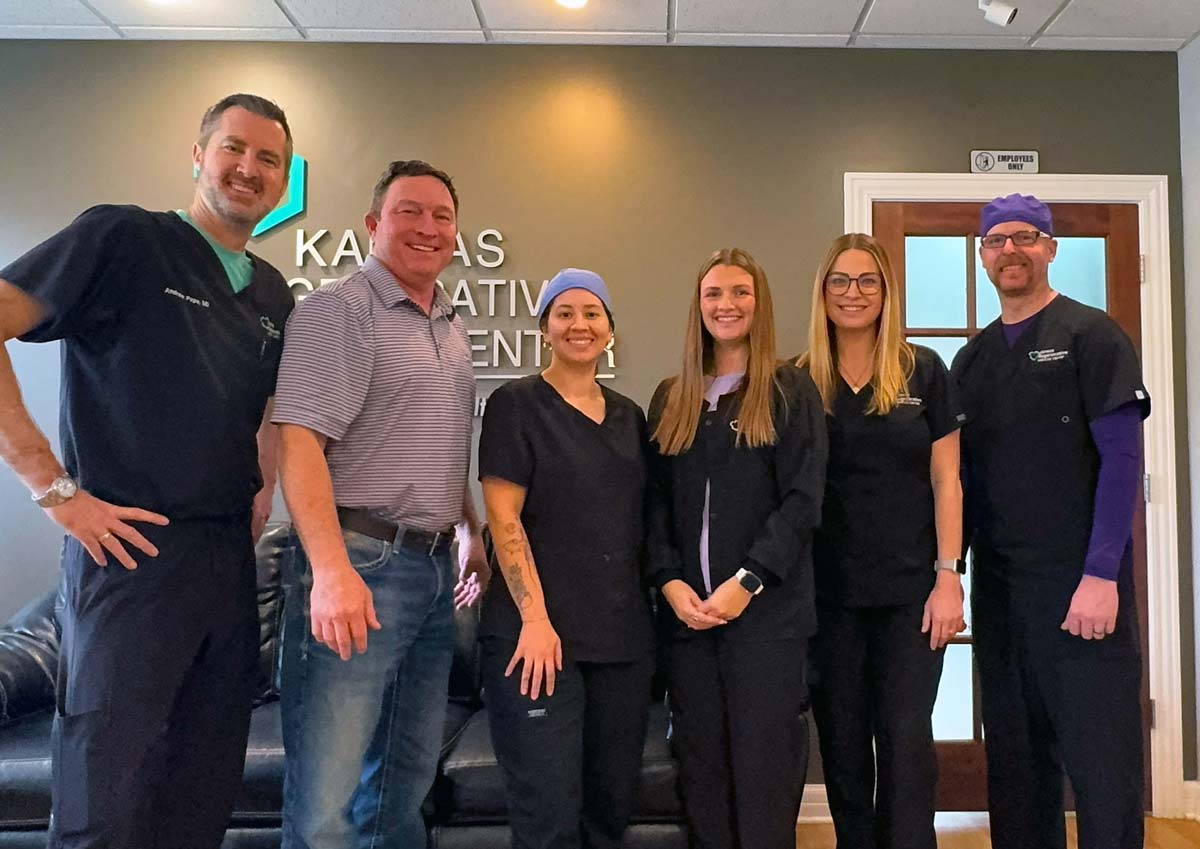
Kansas Regenerative Medicine Center focuses on regenerative treatment options for joint conditions, with care provided by an experienced medical team.
Individual Evaluation
Treatment recommendations are based on each patient's specific needs.
Experienced Medical Team
Care provided by medical professionals experienced in regenerative medicine.
Focused on Joint Care
Regenerative treatment options for knees, hips, shoulders and other joints.
Frequently Asked Questions (FAQ)
Regenerative Medicine is the process of creating living, functional tissues to repair or replace tissue or organ function lost due to damage, or congenital defects. This field holds the promise of regenerating damaged tissues and organs in the body by stimulating previously irreparable organs to heal themselves. (Wikipedia)
We treat: Orthopedic; Osteoarthritis; Neck, Back, & Spine; Shoulders; Knees; Hips; Elbows; Hands & Wrists; Feet & Ankles; Pain Management; Autoimmune; Neurological; Urological; Cardiac & Pulmonary. Plans are currently being made for a number of other specialties.
Stem cells are collected and deployed during the same procedure. Our patients undergo a minimally-invasive liposuction type of harvesting or bone marrow aspiration procedure by one of our highly trained physicians in our specialized treatment facility. The collection procedure generally lasts 30 minutes and can be done under local anesthesia. Cells are then processed and are ready for deployment within 90 minutes.
No. Only certain medical problems are currently being treated at KRMC. Check our list or fill out a candidate application form on the website. All patients need to be medically stable enough to have the treatment in our facility. There may be some exceptional conditions that may eventually be treated in hospitalized patients, but that remains for the future. Some patients may be declined due to the severity of their problem. Other patients may not have conditions appropriate to treat or may not be covered by our specialists or our protocols. A waiting list or outside referral (if we know of someone else treating such a problem) might be applicable in such cases.
Patients who are considered to be candidates based on information provided in the candidate application form will be invited for a consultation with one of our panel physicians. There is no charge for this consultation which includes office evaluation (but may also include physician’s evaluation of X-Rays, records, or telephonic consultations). Unfortunately, insurance generally will not cover the actual cost of stem cell treatment in most cases since stem cell therapy is still considered experimental. The cost varies depending on the disease state being treated and which type of stem cell deployment is required. To apply for medical financing, visit Bank of the Flint Hills at bankflinthills.com.
Could Stem Cell Therapy Be an Option for You?
Regenerative stem cell therapy isn't appropriate for everyone. Learn about the factors KRMC considers when evaluating whether someone may be a candidate for treatment.
Our Locations


© 2025 Kansas Regenerative Medicine Center · All Rights Reserved

