KRMC
KRMC Veteran Salute
At KRMC, we believe soldiers and their families should be revered for their sacrifice, courage and commitment to keeping our nation safe.

As we prepare for Veterans Day, we wanted to tell you about Manuel Perez. He’s a veteran and he’s also a KRMC patient. Manuel came to us for stem cell therapy after playing sports, serving in the military and a lifetime of hard work caught up with him.
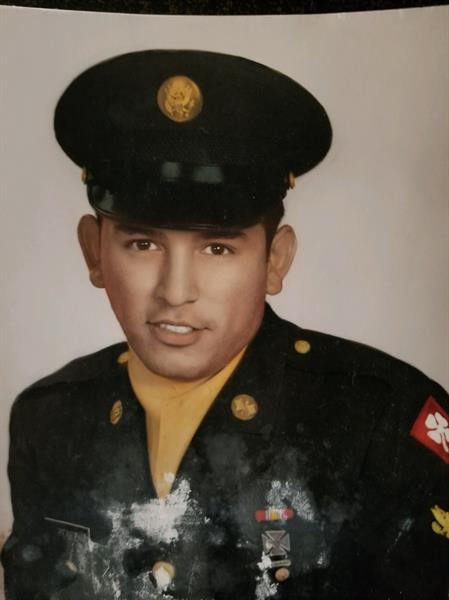
Manuel was raised in Kinsley, Kan., about 30 miles northeast of Dodge City, Kan. At 20-years-old, he was drafted and completed basic training at Fort Leonard Wood, Mo. After that, he spent time at Fort Benning, Ga., and at Fort Hood, Texas. Eventually, Manuel left Texas and spent 21 days on a ship to Vietnam.
Manuel was responsible for keeping the Army’s communication secure during his time in Vietnam.
“I set up radio communications so all the camps could talk to each other and call for help if they were under fire.”
After ten months, Manuel returned to the U.S. and was on inactive duty for four years. “I was on standby and ready in case they needed me,” he said.
Manuel married his wife Marlyn once he was home and they started a family. He worked as a welder, and later was hired by the Kansas Department of Transportation where he cared for the state’s roadways.
“It was my job to make it safe for people to get around,” he said. “I took care of the state’s highways for 20 years, mowing grass, digging ditches and fighting snowstorms.”
After two decades with KDOT, Manuel retired and now works part-time driving auction cars. Marlyn retired as a bank teller and the couple moved to Salina, Kan., to be closer to their nine grandchildren and one great-grandchild.
“We’re both retired and we truly are living the dream,” he said.
Manuel is now in his 70s but said he started to have knee pain in his 50s – something we hear from a lot of our patients.
“I played basketball, baseball and football growing up. Plus, my dad made us do chores and maintain our family garden,” he said. “Eventually, it all started to take its toll on my body.”
To manage the pain, he used wraps and knee braces. Manuel also received cortisone shots but said he didn’t want to rely on those. Eventually, he came to KRMC for stem cell treatment to relieve his pain.
It’s been more than a year since Manuel had the treatment on his knees and he said they no longer bother him. “It’s [stem cell therapy] helped me get around a lot better than I used to,” he said. “I recently watched my grandson play basketball and I could go from bleacher-to-bleacher on the steps. I couldn’t do that before stem cell.”
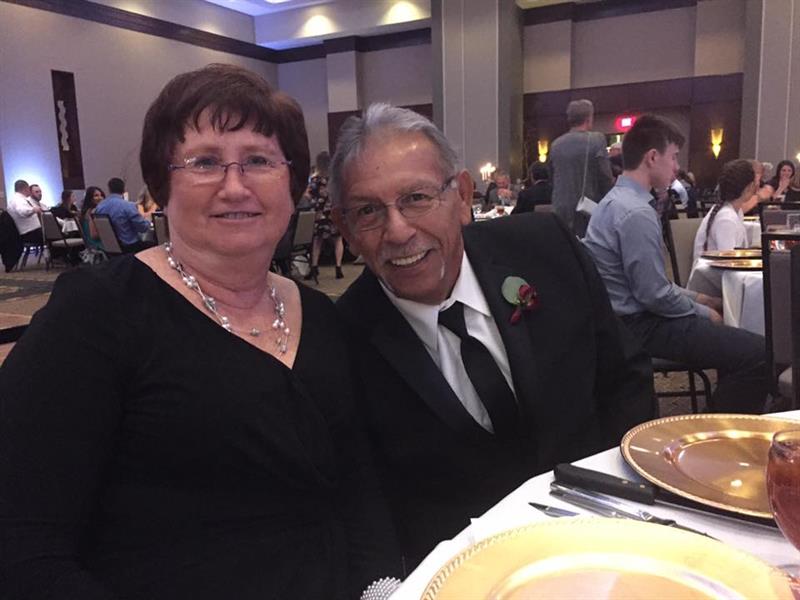
Manuel said he’s glad he had stem cell therapy and offers this bit of advice to others thinking about the procedure: don’t wait.
“If your knees hurt, don’t prolong it,” he said. “Do it earlier, not later.”
Manuel, after the time you spent in service to our country, we’re glad we could offer you a service to keep you feeling good and enjoying retirement.
To all veterans, whatever the branch, whatever the rank, know we’ll raise our flags just a little higher on Veterans Day to say thanks for being one of the brave men and women who kept our nation safe.
Different conditions are treated in different ways and there are different degrees of success. If the goal is regeneration of joint cartilage, one may not see expected results until several months after treatment. Some patients may not experience significant improvement and others may see dramatic regeneration of damaged tissue or resolution of disease. Many of the disorders and problems that the physicians at KRMC are treating represent pioneering work and there is a lack of data. FDA regulations prevent us from making any claims about expectations for success, however, if you are chosen for treatment, it will be explained that we believe stem cell therapy may be beneficial or in some cases that we are unsure and treatment would be considered investigational.
Stem cell therapy relies on the body’s own regenerative healing to occur. The regenerative process may take time, particularly with orthopedic patients, who may not see results for several months. In some diseases, more immediate responses are possible.
No. Participation in any of our protocols is not mandatory and there are no incentives, financial or otherwise, to induce patients to enroll in our studies. However, KRMC is dedicated to clinical research for the development of stem cell science. We take an active role in cutting-edge clinical research in the new field of regenerative medicine. Research studies will be explained and privacy will be maintained. Formal future research studies will be regulated by an Institutional Review Board which is an authorized agency that promotes validity, transparency and protection of human study enrollees.
Patients who are considered to be candidates based on information provided in the candidate application form will be invited for a consultation with one of our panel physicians. There is no charge for this consultation which includes office evaluation (but may also include physician’s evaluation of X-Rays, records, or telephonic consultations). Unfortunately, insurance generally will not cover the actual cost of stem cell treatment in most cases since stem cell therapy is still considered experimental. The cost varies depending on the disease state being treated and which type of stem cell deployment is required. To apply online for medical financing, visit Bank of the Flint Hills.
Because of recent innovations in technology, KRMC is able to provide outpatient stem cell treatment at a fraction of the cost of that seen in many overseas clinics. The fee covers cell harvesting, cell preparation, and stem cell deployment which may include the use of advanced interventional radiology and fluoroscopy techniques. To apply online for medical financing, visit Bank of the Flint Hills.